EIS Observability
Leading observability strategy and systems consolidation for Enterprise Integration Services at Puget Sound Energy.
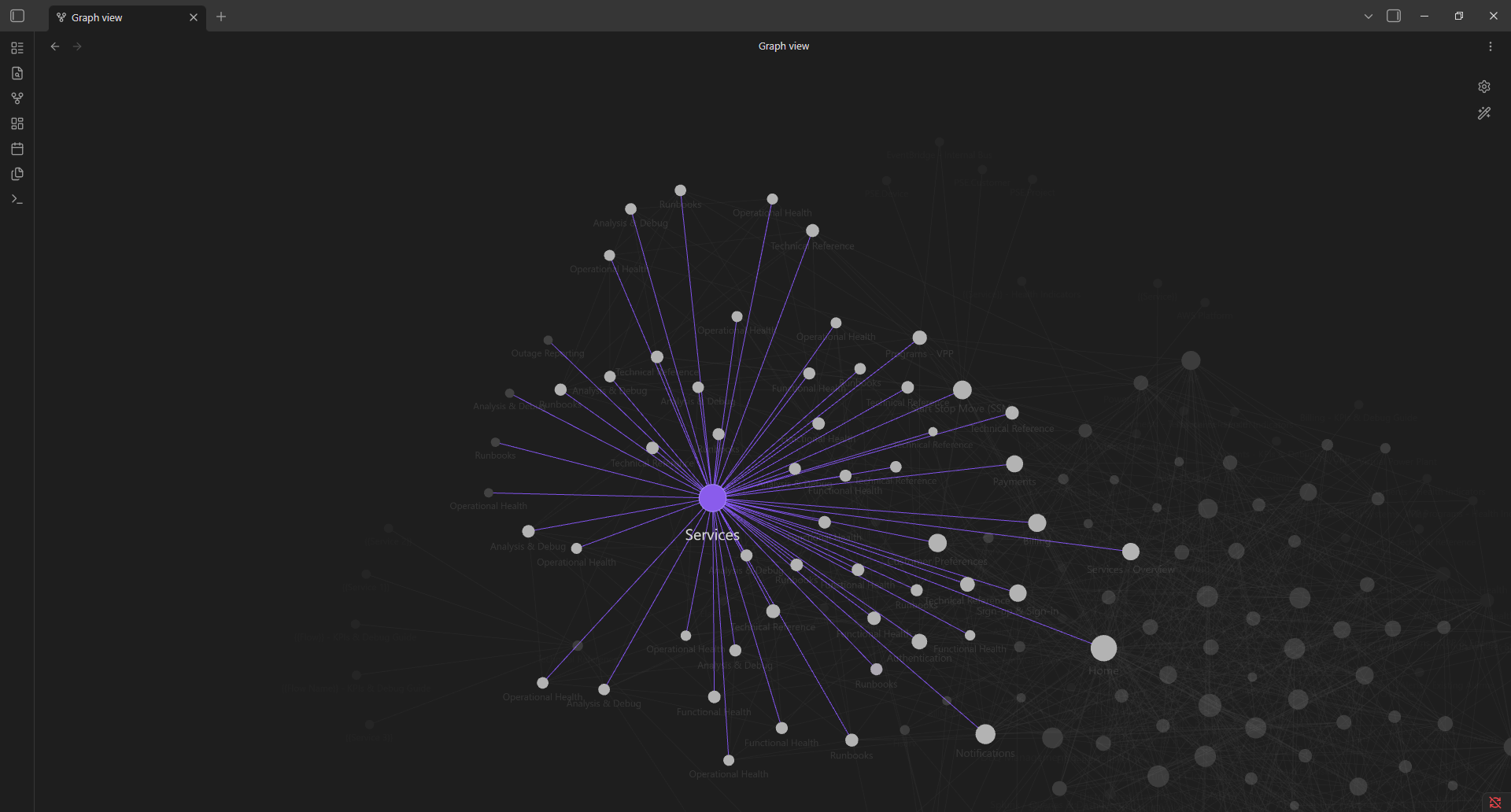
Context
Enterprise Integration Services (EIS) is the integration layer connecting SAP, advanced distribution management systems, AWS backends, customer mobile platforms, and numerous SaaS and internal applications. The landscape was fragmented: disconnected monitoring tools, tribal knowledge scattered across teams, and no unified view of integration health across the application stack.
Challenge
Dozens of disconnected integration points: SAP to AWS, distribution management outages triggering customer notifications, SaaS connecting to internal apps. No single pane of glass existed. Incident detection was slow. Tracing end-to-end service dependencies was difficult. Monitoring focused on technical metrics like latency and HTTP codes rather than whether services were actually doing their job from the user’s perspective.
Approach
Three Pillars: Technology, Process, Culture
Effective observability requires alignment across all three. I established monitoring, alerting, and incident response practices grounded in this framework, ensuring sustainable success within development teams.
Shift to Functional Health
Moved monitoring from isolated technical metrics to holistic end-to-end functional health: measuring whether services are up and doing their job from the user perspective. Users care if their service works. They do not care what HTTP code it returns.
Consolidation & Architecture
Consolidated fragmented monitoring and integration platforms into a unified, observable architecture. Guided engineering teams building AWS serverless microservices with event-driven architecture, managed via Terraform (IaC) and monitored through CloudWatch.
AI Exploration (Personal Initiative)
On my own time, I have explored how LLM-powered knowledge bases and AI-driven workflows could complement observability. This includes retrieving contextual information about microservices, automating documentation, and mapping service dependencies. I am interested in where operations are heading.
Outcome
- Reduced MTTD and MTTR through observable platforms enabling rapid incident detection, diagnosis, and resolution
- Unified monitoring across the entire integration layer
- Improved operational reliability through consolidated architecture
- Established observability culture across development teams
Technologies
AWS Lambda · EventBridge · CloudWatch · Terraform · Serverless Microservices